Announcement:
No active announcements.

Torsekar Viraj Raghunandan

Research topic : Behavioral Ecology and Predator–Prey Interactions

Spandana Baggam

Research area : Science Education and Innovation Outreach

Resapu Rajeswara Reddy

Research area : Materials Characterization and Computational Modeling

Niranjan A Kambi

Research area : Cognitive neuroscience and learning mechanisms

Manoj P Rayaroth

Research area : Environmental Chemistry and Pollution Remediation

Hyndavi Balla

Research area : Oral Cancer and Molecular Diagnostics

Harish Prakash

Research area:Commnity Ecology and Biodiversity Dynamics

Aparna Lajmi

Research area : Evolutionary Ecology and Genomic Architecture

Dhrubajyoti chowdhury

Research area : Synaptic Mechanisms of Neural Plasticity and Vulnerability

Nalini Bikkina

Research area:Rural Livelihoods,Forced Migration and Climate Change Adapatation

Partha Laskar

Research area : Advancing Research and Technology for Innovative Sustainable Translation

01 / 13

What is the Research & Mentoring Program?

WHAT & WHY

The Research and Mentoring Program is evolving into a dynamic institutional platform that integrates mentorship, interdisciplinary science, innovation, and research development into a sustained collaborative ecosystem. By combining structured working sessions, scientific exchange, technology-enabled coordination, and community-centered engagement, the program seeks to inspire the next generation of researchers while strengthening GITAM's long-term research identity and competitiveness. 

HOW WE DO IT

The Research and Mentoring Program aims to cultivate a collaborative and interdisciplinary research culture that empowers faculty, postdoctoral scholars, and students to develop innovative scientific ideas, strengthen mentorship networks, and build competitive research pathways aligned with emerging societal and technological challenges.

 Through structured working sessions, interdisciplinary breakout discussions, mentorship engagement, and research presentation forums, the program seeks to foster intellectual curiosity, research excellence, translational thinking, and a sustainable ecosystem for scientific growth and innovation within GITAM University.

 A pilot Research and Mentoring Program-I was conducted during the Spring Semester (April 23 – May 1, 2026). 

The expanded program model, Research and Mentoring Program-II planned for the Fall Semester of 2026 (dates to be announced), will integrate: 

  • Collaborative abstract development and proposal incubation
  • Interdisciplinary scientific exchange
  • Mentorship and research training
  • Competitive oral and poster presentations
  • Faculty and student research awards
  • Technology-enabled research coordination
  • Community-building activities that strengthen long-term academic partnerships and institutional identity
What to expect

The retreat is designed to create measurable, lasting impact across research excellence, mentorship quality, and institutional identity.

Collaborative Abstract Development

Foster joint research proposals and incubate collaborative ideas across departments and disciplines.

Interdisciplinary Scientific Exchange

Create structured forums for cross-disciplinary dialogue, generating new research insights and partnerships.

Mentorship & Research Training

Build sustainable mentorship networks connecting faculty, postdoctoral scholars, and graduate students.

Competitive Presentations & Awards

Recognize and reward outstanding oral and poster presentations by faculty and students through merit-based awards.

Technology-Enabled Coordination

Leverage digital platforms and tools to enhance research coordination, outreach, and ongoing collaboration.

Community & Institutional Identity

Strengthen long-term academic partnerships and build a shared research identity across GITAM campuses.

Past & Upcoming Retreats

Track the evolution of the Research & Mentoring Program from pilot to a full annual institutional program.

24 Sep 2026
Virtual Session

Peptide Self-assembly and Synthetic Intelligent Materials

The presentation by Dr. Shibaji Basak will explore peptide-based supramolecular chemistry, focusing on complex molecular behaviours and emergent functions arising from molecular recognition, self-assembly, and responsiveness.

10 Sep 2026
Virtual Session

Computational Model Predictions of Speech Recognition in Human Hearing

The presentation by Dr Harshavardhan S will explore how speech is recognized and understood by the human hearing system, particularly in situations where multiple people are speaking simultaneously. Using computational models and artificial neural networks, the research examines how speech is processed and represented in the human auditory system. The work is supported by research funding focused on the design of improved hearing aids and the development of advanced speech-processing technologies

20 Aug 2026

Bees Under Pressure : Decoding Stress in India's Pollinators

The session by Dr. Reshma Basak will explore how bees and other pollinators respond to human-driven environmental stress and what these responses mean for ecosystems and food security. The presentation will draw on research involving native Indian species and approaches ranging from field sampling to gut microbiome profiling and physiological stress markers to understand how pollinators are adapting to a changing environment.
Dr. K. G. Ananthamurthy's Profile will be the Moderator.

16 Jul 2026

Engineering and Prototyping: From Observations to Products

The session will cover robotics research and real-world applications, drone technologies, underwater vehicles, societal applications of robotics and automation, funded research projects, prototyping and product development, cross-disciplinary research opportunities, and the research facilities available at the School of Core Engineering.

18 Jun 2026
Expert Session

Medical Technology and Interdisciplinary Healthcare Innovation

An expert session by Dr. Hyandavi Balla on interdisciplinary healthcare innovation, highlighting the integration of medicine, dentistry, biomedical engineering, AI, and digital health technologies, along with regulatory pathways for translational research.
21 May 2026
Virtual Session

Follow-up Discussion with Prof. Sunita Ho

A continuation of the retreat discussions to explore future themes, collaboration opportunities, and research mentoring initiatives.
1 May 2026
Research Retreat

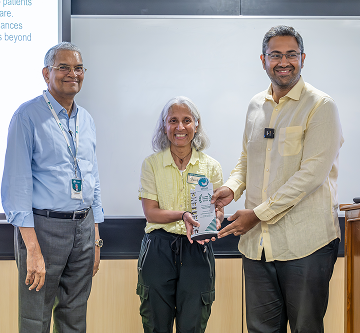
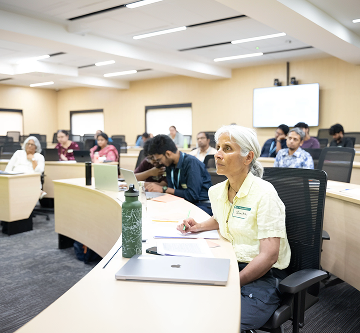
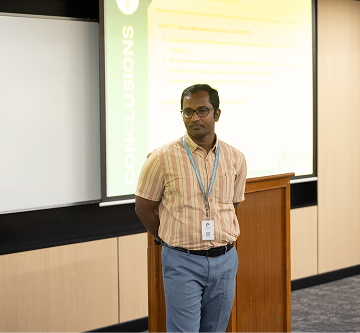
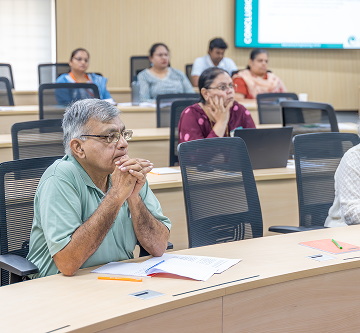
Research and Mentoring Retreat by Prof. Sunita Ho

Continuation of the faculty retreat on research mentoring, scholarly engagement, and collaborative research discussions.

25 Apr 2026
Research Retreat

Research and Mentoring Retreat by Prof. Sunita Ho

A faculty retreat focused on research mentoring, scholarly engagement, and fostering collaborative research discussions.

Abstract & Presentation Showcase

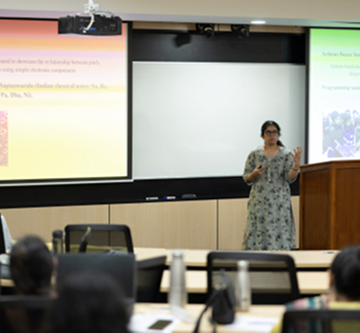
Research and Mentoring Program - 1

Sensory Motivators and Spatial Experience

Sudhir Kumar Pasala · School of Architecture

Balancing Profitability with Sustainability and Ethics in Supply Chain Management: An ESG Perspective

Ch. Sree Manasa · School of Business

The aesthetics of shopping: a detailed analysis of the BQ vocabulary curated by millennials during online shopping

Pronema Bagchi . · School of Social Sciences and Humanities

Research and Mentoring Program - 2

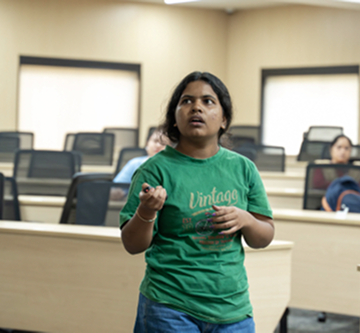
Side Effects May Include...: How Urban Pharmaceutical Pollutants Drive Reproductive Disruption in Tropical Frogs

Dhwani Dave

Beauty Quotient and Aesthetics

Pronema Bagchi & Sudhir Kumar Pasala

Short-term memory in honey bees

Sushobhan Dash .

Faculty Research Highlights

World-class researchers leading GITAM's scientific advancement.

Torsekar Viraj Raghunandan

Behavioral Ecology and Predator–Prey Interactions

Research examines predator-prey interactions in natural populations, exploring how animals manage risk and how defense responses influence mating behavior, evolution, and ecosystem dynamics.

Spandana Baggam

Science Education and Innovation Outreach

Currently involved in the project “Let Us DO Science (LuDoS): Embarking Scientific Innovation by School Children,” funded by NCSTC, DST.

Resapu Rajeswara Reddy

Materials Characterization and Computational Modeling

Research focuses on characterizing material behavior through experimental testing, advanced imaging techniques, and computational modeling.

Niranjan A. Kambi

Cognitive neuroscience and learning mechanisms

Research focuses on cognitive neuroscience and electrophysiology, with particular emphasis on learning and memory using diverse animal models ranging from

Manoj P Rayaroth

Environmental Chemistry and Pollution Remediation

Research interests span environmental chemistry, including the identification of environmental pollutants and the development of remediation strategies

Hyndavi Balla

Oral Cancer and Molecular Diagnostics

Research focuses on oral cancer, potentially malignant disorders, and the diagnosis of oral diseases using histopathological and molecular techniques.

Harish Prakash

Community Ecology and Biodiversity Dynamics

Research focuses on the community structure and dynamics of birds and bats in the Eastern Ghats, as well as rocky intertidal organisms along the Bay of Bengal

Aparna Lajmi

Evolutionary Ecology and Genomic Architecture

Research examines the ecological and evolutionary drivers of complex traits and their impact on genomic architecture, using ants and lizards as model systems.

Partha Laskar

Advancing Research and Technology for Innovative Sustainable Translation

Leads research on sustainable biofunctional polymer materials with a focus on developing translational and application-oriented solutions.

Dhrubajyoti Chowdhury

Synaptic Mechanisms of Neural Plasticity and Vulnerability

Research focuses on cellular and molecular neuroscience, investigating the molecular mechanisms underlying neuronal function using biochemical,

Lubza Nihar

Value relevance of accounting information and green finance.

Research interests include earnings management, Islamic finance, corporate governance and sustainable finance.

Nalini Bikkina

Rural Livelihoods, Forced Migration and Climate Change Adaptation

Her research interests include rural development, women's empowerment, tribal communities, and sustainable livelihoods. She also focuses on

Reshma Basak

Neuroethology of Insects

Research combines computational neuroscience and behavioral biology to understand how brain and physiological systems shape decision-making in

Dr. K. G. Ananthamurthy

Systems Neuroscience

With a focus on Computational Neuroscience, my research integrates Programming, Molecular Dynamics, and Functional Genomics to study complex Neurobiological Disorders.

Leadership, Coordination & Contact

Reach out to the organizing team for questions, registrations, or collaboration inquiries.

Manjula Rao

Director of strategic initiatives

Sunita Ho

Professor, University of California, San Francisco